
GİRESUN KONAK PROJESİ
GİRESUN KONAK PROJESİ
Proje %72,4 oranında paya sahip olduğumuz iştirakimiz Konaklı Metal Madencilik A.Ş. tarafından yürütülmektedir.Teck Resources Limited’in iştiraki olan Teck Madencilik Sanayi ve Ticaret A.Ş. (Teck) ile Şirketimiz arasında projenin geliştirilmesi için bir “ortaklar sözleşmesi” (Joint Venture Agreement) imzalanmış ve Türk Altın Grubu’nun %60, Teck’in ise %40 oranında iştiraki ile Konaklı Metal Madencilik A.Ş. kurulmuştur.Yapılan sözleşme gereği Şirketimiz Konak Projesi’nin işletmecisi olacaktır. Konak Projesi Türkiye’nin Kuzeydoğusunda, Karadeniz Bölgesi, Doğu Pontid tektonik bölgesinde yer almaktadır (Şekil 1).Konak Projesi Cu-Au-Mo anomali ilişkili alterasyon sistemi, Türkiye’nin Kuzeydoğusundaki Doğu Pontid tektonik bölgesi içinde yeralan muhtemel porfiri ilişkili hidrotermal sistemlerden biridir.
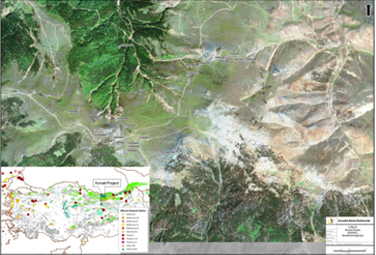 Şekil 1 – Yer Bulduru Haritası
İnceleme alanının orta bölümlerinde KKB-GGD uzanımlı, baskın olarak diyorit bileşiminde bir porfiri stok haritalanmıştır ve kuzeye doğru,heyelan alanı boyunca gözlenebilmektedir. Porfiristoğun bulunduğu ana kayaç; kuvars-eye porfiri olup, inceleme alanının doğu kesiminde baskın olarak bulunmasının yanısıra, BGB kesiminde seyrek olarak gözlenmektedir. Diyoritik porfiri stoğun üzerindeki K-G uzanımlı ana derelerde, yoğun kuvars/pirit (fillik) alterasyonu ile birliktebirbirine paralel, stokvörk şeklinde, kuvars, pirit damarcıkları, yer yer molibdenit mineralizasyonu tespit edilmiştir. Kuvars-eye porfiri, yaygın olarak arjilik/ileri arjilik altere şekilde, yama dokulu kaolinit mineralizasyonu ile gözlenmektedir. Konak sisteminin, anapiritik orta-ileri arjilikalterasyon zonunun yayılımı, büyük bir yapısal koridor boyunca 1,7 km’yi aşmaktadır.
Cu-Au porfiri tipi mineralizasyon anakütlesi, yüksek manyetik anomali ile ilişkilidir. Gradyan IP çalışması, bir dizi kuzey-kuzeybatı doğrultulu şiddetli anomali içinde, geniş bir alanda yüksek yüklenebilirlik göstermektedir. IP anomali, kuzey ve güneye açık bir şekilde bulunmaktadır. Ayrıcaoldukça şiddetli bir IP anomalisi olan Konak IP anomalisi, doğu batı yönünde 900 m ve kuzey güney yönünde 650 m civarında olup düşük rezistiviteyle uyumludur.
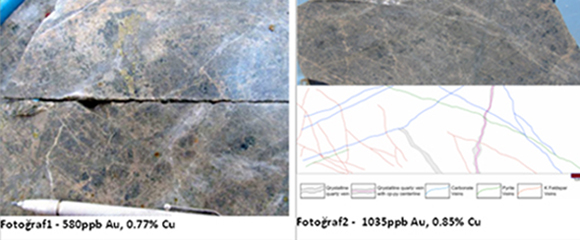
Manyetik duyarlılık verileri, mineralize zonlarda, geniş bir aralık boyunca Cu ve Au‘nın, , manyetitle ilişkili olduğunu göstermektedir (manyetitin, kuvars-illit-pirit alterasyonu gibi sonradan meydana gelen alterasyonla yok olduğu haller dışında).Erken evre, yüksek ısılı kuvars damarları, tipik olarak duraylı manyetit; yersel olarak piritle birlikte bakır minerali olarak başlıca gözlenen, kalkopirit ile ilişkilidir. Geç evre pirit damarları ± centerline kuvars damarları; erken evre damarları keser, manyetiti ortadan kaldıran yaygın illit alterasyonunun yanı sıra illitli alterasyon haleleriyle birlikte bulunur (Fotoğraf 1,2).
Nadir de olsa bornitin varlığı, mineralizasyonla yaşıt küçük hacimli intrüzifler ve gözlemlenen nispeten küçük çaplı breş gelişimi, daha yüksek bir hipojen tenör potansiyeline işaret etmektedir.
Konak’ta gözlenen aşınma nispeten sığ derinliklidir; silisleşmiş ve kuvars-alunit altere lithocap’e ait yüzlekler güncel topoğrafyada,2200 ile2300 m kotlarında bulunmaktadır, bunun yanısıra; lithocap ‘in altında profillitin bulunması, lithocap ve porfiri ortamın üstü arasındaki tipik geçiş zonunu göstermektedir.
Eğer paleotopoğrafya,silisleşmiş lithocap yüzleklerinin, 200 m üzerindeyaklaşık 2500m kotundaysa, en derin sondajın kuyu tabanı, paleotopoğrafyada yaklaşık 1300m derinliğe karşılık gelir. Örneğin; bu derinlik, Bingham Canyon yatağının işletilmeden önceki topoğrafyasının yaklaşık paleoderinliğidir (Jeffrey Hedenquist).